

Which Culinary Course is Best for You? 1-Year Diploma, Advanced Diploma or More
The hospitality landscape in India is currently witnessing an unprecedented boom. As we move through 2026, the demand for skilled culinary professionals is reaching record highs, fueled by the opening of over 200 new hotels and a massive surge in international tourism. For aspiring chefs, this presents a golden opportunity to launch a chef career in 5 star hotels, luxury resorts, or even global cruise lines. However, the path you choose today defines your trajectory for the next decade.
Choosing the right culinary arts courses in India can be the difference between struggling in a local kitchen and commanding a world-class galley in the Caribbean or Dubai. Many students find themselves at a crossroads after school: Should you opt for a quick, intensive 1-year diploma, invest in a 2-year advanced diploma, or pursue a full-length degree? Each path offers distinct advantages tailored to different career goals, budgets, and timelines. This comprehensive guide will help you decide which culinary arts course in India best matches your goals, time, budget, and career aspirations.
Understanding Culinary Arts Education in India
Culinary education in India has evolved from simple apprenticeships to sophisticated, globally accredited programmes. Today, students can choose from short-term certifications (3–6 months), diplomas (1 year), advanced/international diplomas (2 years), and degrees (3–4 years).
While degrees provide a broad academic foundation in hotel management, diploma-level programmes have become the most popular choice for those seeking a quick and practical entry into professional kitchens. These courses prioritise “learning by doing,” often featuring an 80% practical and 20% theory split, which is exactly what modern executive chefs look for in new hires. Whether you want to become a chef in India or work abroad, understanding these levels is the first step to your success.
1-Year Diploma in Culinary Arts – Fast Track to Your Dream Kitchen
The 1 year diploma in culinary arts is designed for students who are eager to start their careers immediately. It is widely considered the best culinary course after 12th for those who want a focused, no-nonsense path to employment.
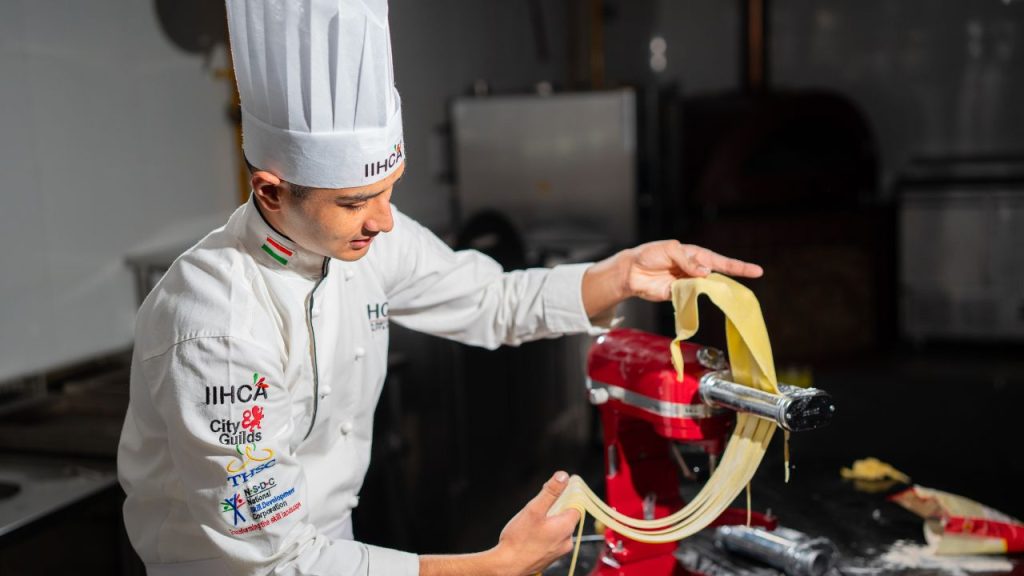
Duration and Eligibility
This programme typically lasts 12 months. The eligibility criteria are straightforward: you must have completed Class 12 from any stream (Arts, Science, or Commerce) and be at least 16 or 17 years old. No prior professional experience is required, making it perfect for passionate home cooks.
What You Will Learn
The curriculum is intensive, focusing on the fundamentals of the classical kitchen brigade system. You will master:
- Professional Kitchen Basics: Precision knife skills (julienne, brunoise), food safety (HACCP), and hygiene protocols.
- Global Cuisines: Mastery of Indian, French, Continental, and basic Asian cuisines.
- Specialised Skills: Baking and pastry arts, menu planning, and basic kitchen management.
- Industry Exposure: Most programmes, like those at IIHCA, include an optional 12-month internship in 4-5 star hotels.
Career Outcomes
Graduates typically enter the industry as a Commis Chef, the foundational role in a professional kitchen. In 2026, the commis chef salary in India ranges from ₹15,000 to ₹30,000 per month, with rapid growth to Chef de Partie (CDP) roles within 1–2 years for high performers. Top placements often include prestigious chains like Taj, Marriott, Oberoi, and ITC.
Best Suited For: Students wanting a fast career launch and a quicker return on investment.
Advanced Diploma in Culinary Arts – Building Leadership & Global Excellence
An advanced diploma in culinary arts (often a 2-year programme) is the ideal choice for those aiming for senior leadership roles and international mobility. This course goes beyond the “how-to” of cooking and dives into the “why” of food science.
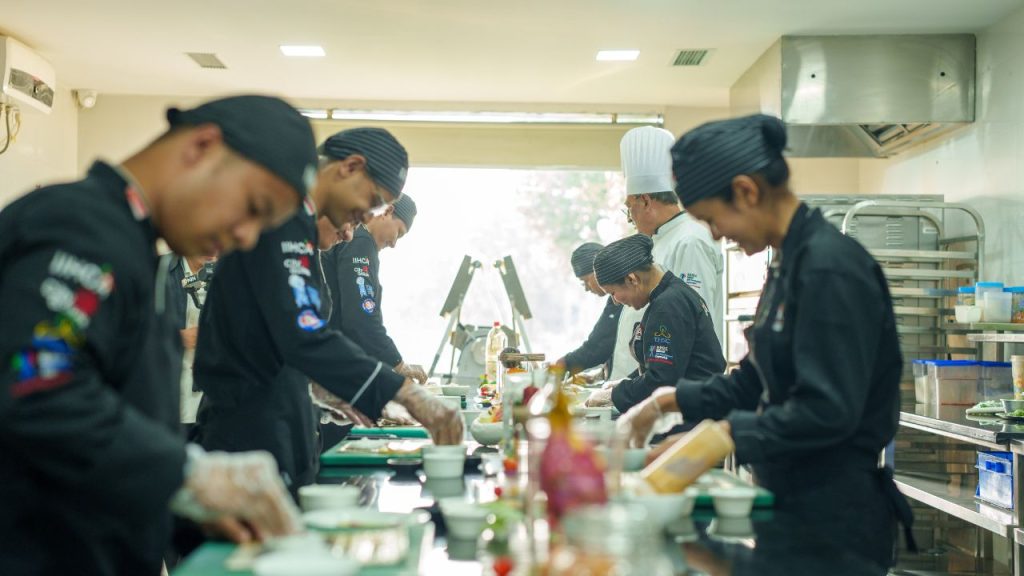
Curriculum Depth
The first year often mirrors the foundational diploma, while the second year focuses on advanced science and management.
- Advanced Techniques: Molecular gastronomy, sous-vide cooking, fermentation, and contemporary precision plating.
- International Mastery: Deep dives into Japanese (sushi/ramen), Thai, Arabic, and Caribbean cuisines.
- Management & Leadership: Modules on food chemistry, cost control, kitchen leadership, and high-volume operations.
Pros and Global Opportunities
The primary advantage is the depth of training. This programme is frequently accredited by international bodies like City & Guilds, London, ensuring your skills are recognised worldwide. It includes mandatory 12-month internships that can be conducted in international hubs like the UAE, Maldives, Spain, or France.
Career Outcomes
While you may still start in a Commis or Demi-CDP role, your progression to Sous Chef or Executive Chef roles is typically much faster due to your scientific and management background. Starting salaries can range from ₹30,000 to ₹60,000 initially, but the real value lies in cruise line chef jobs, where salaries can scale from $2,000 to over $4,000 tax-free monthly with experience.
Best Suited For: Students aiming for international careers and long-term executive leadership.
Factors to Consider Before Choosing Your Culinary Course
Making the right choice requires honest self-assessment and research. Consider the following:
- Your Career Goal: Do you want to be in the kitchen cooking every day, or are you more interested in the corporate management side of hotels? Diplomas are for the former; degrees are often for the latter.
- Time & Financial Investment: A 1-year course is the most affordable and fastest way to start earning. An advanced diploma requires more time but offers higher long-term “ROI” through international placements.
- Accreditation Matters: Always look for a City & Guilds accredited culinary course. This ensures the curriculum meets global standards required by cruise lines and international luxury hotels.
- Facilities: Ensure the institute has state-of-the-art kitchens that mimic 5-star environments. You cannot learn to be a chef from a textbook.
How These Courses Help You Become a Chef in a 5-Star Hotel?
The journey to a chef career in 5 star hotels begins with mastering professional discipline. 5-star kitchens operate with military precision. Structured hands-on culinary training teaches you to handle the pressure of “service,” maintain impeccable hygiene (HACCP), and work seamlessly within a team.
Furthermore, reputable institutes provide the platform for “Portfolio Building.” During your culinary internship India or abroad, you build the references and practical experience that make your CV stand out to recruiters from the Taj or Marriott groups.
IIHCA’s Culinary Programs – A Trusted Choice for Aspiring Chefs
The Ishtha Institute of Hospitality and Culinary Arts (IIHCA) in Khatima, Uttarakhand, has established itself as a premier destination for culinary education in India. As a THSC Centre of Excellence—one of only 10 in India—IIHCA offers both the 1-Year and 2-Year Assured Diplomas.
What sets IIHCA apart is its faculty, led by veterans like Chef Dev Chand, who brings 36 years of experience, including 28 years on international cruise lines. With an alumni network of over 8,500 students—5,500+ in 5-star hotels and 3,000+ on cruises—IIHCA provides a proven pathway to success. The institute offers 80%+ practical training and a global placement network covering the UAE, Maldives, France, and more.
Conclusion & Final Recommendation
The “best” course depends entirely on your personal ambition.
- Choose the 1-Year Diploma if you are eager to enter the workforce, have a limited budget, or want to start earning and gaining experience as quickly as possible.
- Choose the Advanced Diploma if you have the time to invest in your craft, desire a deep understanding of culinary science, and are specifically targeting high-paying international roles or cruise line careers.
- Consider a Degree only if you prefer an academic environment and aim for general administrative or corporate roles in hospitality rather than being a specialist chef.
Your professional culinary career begins with the right training. Research the institutes, visit the campuses, and take that first step towards a rewarding and creative career in 2026.
Student Success Stories
Our alumni are our pride! Here’s what some of our students have to say: